I think we’ve gotten really bad at talking about homeschool.
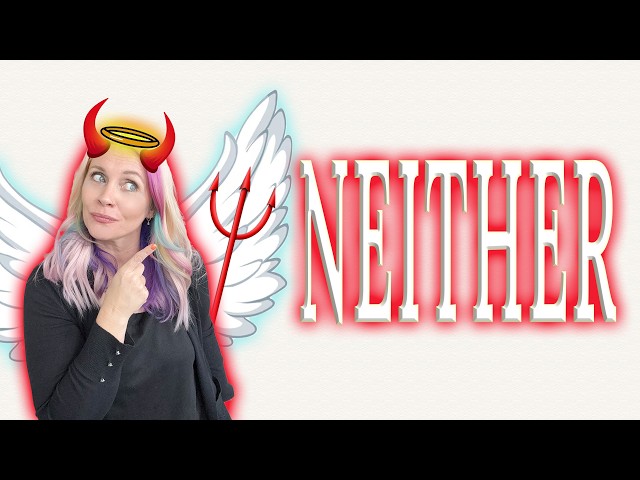
And after 10 years of doing it, I’ve become increasingly convinced that one of the biggest problems is that we keep trying to turn educational choices into absolutes.
Homeschool is either wonderful or terrible.
It’s either the answer to everything or the reason everything is wrong.
It’s either the superior alternative to traditional education or something that should be viewed with suspicion.
I don’t think any of that is particularly helpful.

Be sure to subscribe to our monthly newsletter to be an insider and to follow along with our days over on Instagram @makingeverydaymagic.
I love homeschooling. That doesn’t make homeschool universally good.
Our family has been homeschooling for 10 years.
This year I have a 9th grader and a 5th grader, and homeschooling is still the educational model that works for our family.
It gives us flexibility.
It allows us to customize what our kids are learning.
It allows us to spend more time on the things that matter to them and less time on things that don’t.
It lets us build an educational life around our actual family instead of trying to make our family fit neatly into an existing school structure.
There are a lot of things I genuinely love about it.
But that’s my experience.
And one of the things I think we get wrong in the homeschool conversation is taking a personal success story and turning it into a universal prescription.
My homeschool is working for my kids.
That doesn’t mean homeschool is automatically the best educational choice for every child.
Homeschool can be really wonderful.
There are absolutely circumstances where homeschooling can be an incredible option.
A child may thrive with a different pace or environment.
A family may need flexibility that a traditional school can’t provide.
A learner may have interests that are difficult to accommodate within a standard school day.
Some kids simply learn better when their education can be adjusted around the way they actually learn.
We’ve experienced many of those benefits ourselves.
But homeschool isn’t magic.
It doesn’t automatically produce engaged learners.
It doesn’t automatically create happy families.
It doesn’t automatically solve every problem a child might have with school.
And simply removing a child from a traditional classroom doesn’t guarantee that what replaces it will be good.
There are legitimate criticisms of homeschooling.
This is the part of the conversation that can get uncomfortable.
I think there are legitimate reasons to criticize homeschool.
In places where there is minimal oversight, there can be very real consequences.
Educational gaps can go unnoticed.
Children can experience educational neglect.
And in some situations, the fact that a child is being homeschooled can make other forms of neglect or abuse harder for outsiders to see.
I don’t think acknowledging those problems is an attack on homeschoolers.
It’s acknowledging reality.
My kids getting a good education doesn’t mean every homeschooled child is getting a good education.
And I don’t think we should have to pretend otherwise in order to defend the choice we’ve made for ourselves.

But the same complexity exists in every educational system.
This is where I think the conversation gets particularly interesting.
Public school can be a wonderful fit for a child.
Public school can also fail a child.
Private school can be a wonderful fit.
Private school can also be inaccessible or simply not appropriate for a particular learner.
Charter schools can work beautifully for some families.
They can be the wrong fit for others.
Montessori schools, preschools, community colleges, universities — the same basic principle applies.
There isn’t an educational model that is universally perfect.
Because children aren’t universal.
Families aren’t universal.
Circumstances aren’t universal.
Resources aren’t universal.
And the people inside these systems aren’t interchangeable.
Our circumstances matter, too.
One of the things I’ve become more aware of over the years is how much our ability to homeschool depends on the structure of our life.
We have one parent who works outside the home and one parent who is fortunate enough to work inside the home.
We have circumstances that make it possible for me to spend the amount of time I do on our kids’ education.
We have resources and flexibility that many families simply don’t have.
I don’t want to gloss over that.
Homeschooling isn’t just a philosophical decision.
For many families, it is also a logistical and economic one.
Can someone stay home?
Can the family make the schedule work?
Does the child need a particular kind of support?
What happens when a parent is exhausted?
What happens when a child isn’t thriving?
What happens when the family needs the school system to provide childcare so that the adults can work?
These things matter.
And pretending they don’t doesn’t make homeschooling more accessible. It just makes the conversation less honest.
I don’t want to be your homeschool guru.
This is probably one of the most important things I want people to understand about what I do here.
I’m going to tell you about my homeschool.
I’m going to tell you what we’re using.
I’m going to tell you what we’re changing.
I’m going to tell you what works.
I’m going to tell you what doesn’t.
I’m going to tell you the things I love and the things I would happily never do again.
But I’m never going to tell you that you should do exactly what we’re doing.
Because I don’t know your family.
I don’t know your children.
I don’t know your circumstances.
And I don’t want every home to look like ours.
I want your home to be your home.
If that means homeschooling, wonderful.
If it means public school, wonderful.
If it means private school, charter school, Montessori, a hybrid model, online school, community college, or some combination of things over the course of your child’s education, that’s your family’s story to write.

What works for me may not work for you.
I think that’s actually one of the most freeing things we can remember about education.
We don’t have to agree.
We don’t have to choose the same path.
We don’t even have to think the same educational model is a good fit for our own families.
We can still respect one another.
We can still learn from each other.
And we can still acknowledge that our own experience isn’t universal.
That’s the conversation I want to keep having here.
Not “homeschool is perfect.”
Not “homeschool is terrible.”
Not “everyone should homeschool.”
Not “no one should homeschool.”
Just:
This is what we’re doing.
This is why we’re doing it.
This is what’s working.
This is what isn’t.
And this is what I’ve learned along the way.
After 10 years of homeschooling, I love our life.
I think our homeschool is pretty awesome.
And I also know that it is only one version of what education can look like.
Homeschool isn’t the answer to every question.
But it isn’t the answer to no questions, either.
Maybe we can stop asking educational choices to be universally good or universally bad.
Maybe we can start asking a more useful question:
Is this serving this particular child and this particular family well?
For us, right now, homeschooling is.
And that’s enough.
What is good for me may not be good for you.
And that’s okay.
Let’s keep sharing.
Let’s keep learning.
Let’s keep coexisting.
And let’s keep making everyday magic.